
Solheim’s Concepts in Critical Care
Written by Amy Gloger, Jeff Solheim, and Andrea Perry, Concepts in Critical Care is a course designed to increase your knowledge of caring for a patient who requires critical care.
Do you work in critical care or another inpatient unit with critically ill patients? Do you find yourself having to care for ICU holds in your ED? Do you interface with the ICU while providing care in a prehospital or inter-hospital setting?
If you are looking to provide the best care, no matter what department you work in, Concepts in Critical Care by Solheim Enterprises should be your next course. We tackle some of the most challenging topics in interdepartmental patient care and how you, no matter your role, can achieve better patient outcomes.
Whether it is taught in person, virtually, or through our on-demand option, the course content is the same! Plus, students can earn up to 15.5 Contact Hours!*
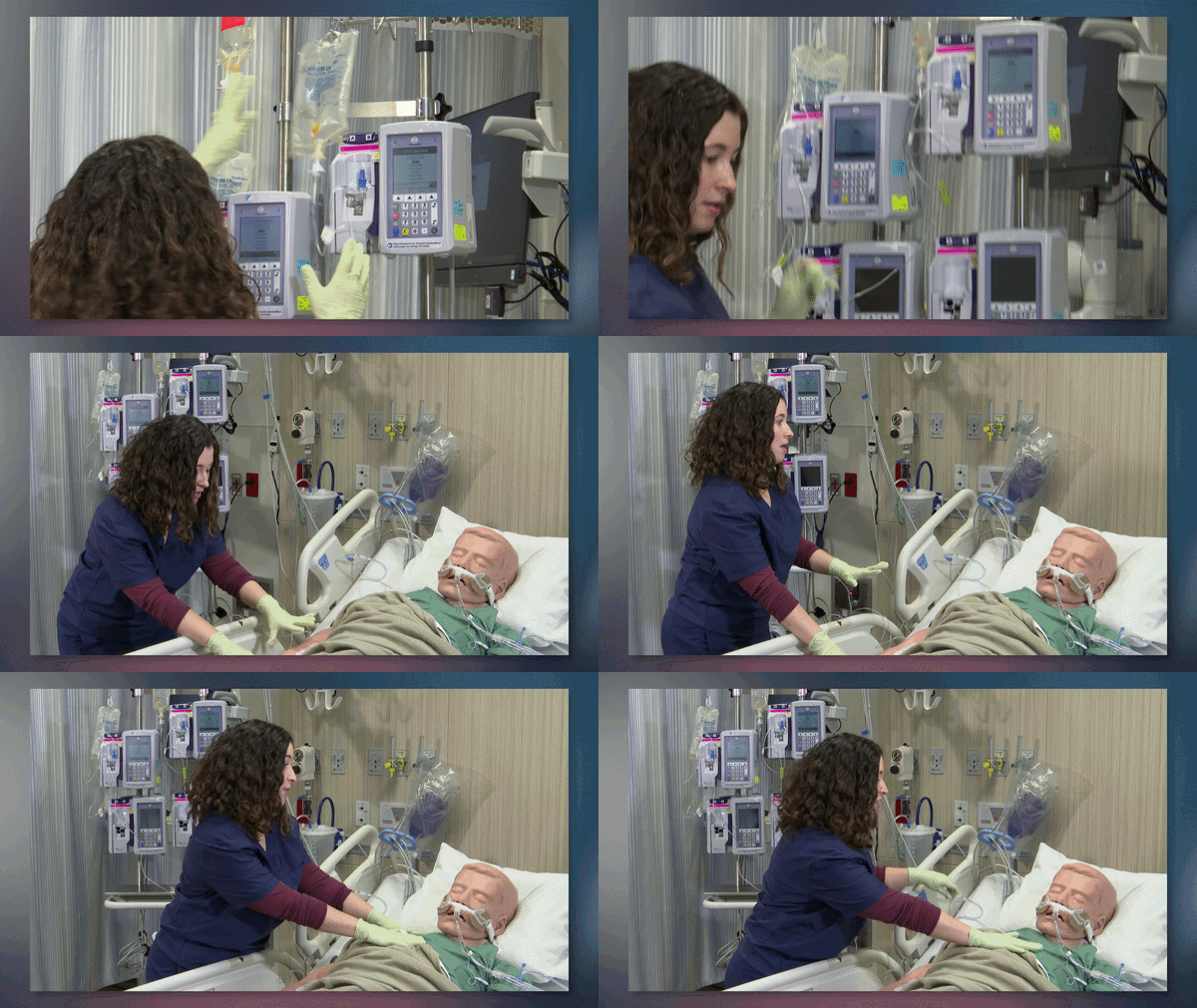
Course Curriculum
Cardiac Physiology: This lecture reviews basic concepts of cardiac anatomy and physiology. Building upon these concepts, we dive into a high-level overview of hemodynamics. Throughout this lecture, we reinforce the learning with carefully crafted case studies to prepare the learner to use the information at the bedside.
Arterial Lines and Central Lines: This lecture explores the indications and management of arterial and central lines. We will demonstrate how to: prime an arterial line, draw labs from an arterial line, level and zero and arterial line, and obtain a CVP pressure reading.
Critical Care Infusions: This lecture covers critical care infusions commonly prescribed for ICU and PCU patients. We review indications, side effects, common dosages; and expand our understanding of these concepts through case studies.
Pulmonary Physiology: This lecture will walk you through ABGs, respiratory failure, and ventilator management. At the end, we bring these topics together with case studies.
Critical Care Assessment: This lecture starts by comparing the different types of assessments seen in critical care nursing: head-to-toe, ongoing, and focused. After discussing the different types, we go through a case study to illustrate when each type of assessment is appropriate. Finally, we review the common hospital-acquired infections and complications seen in critical care: CLABSIs, CAUTIs, NV-HAP, VAP, and pressure ulcers, and how to prevent them.
Critical Care Case Studies: We wrap up this course by going through two different case studies. Each case study utilizes concepts from all of the lectures so the learner can see how to use this information in real life.
Course-related Materials
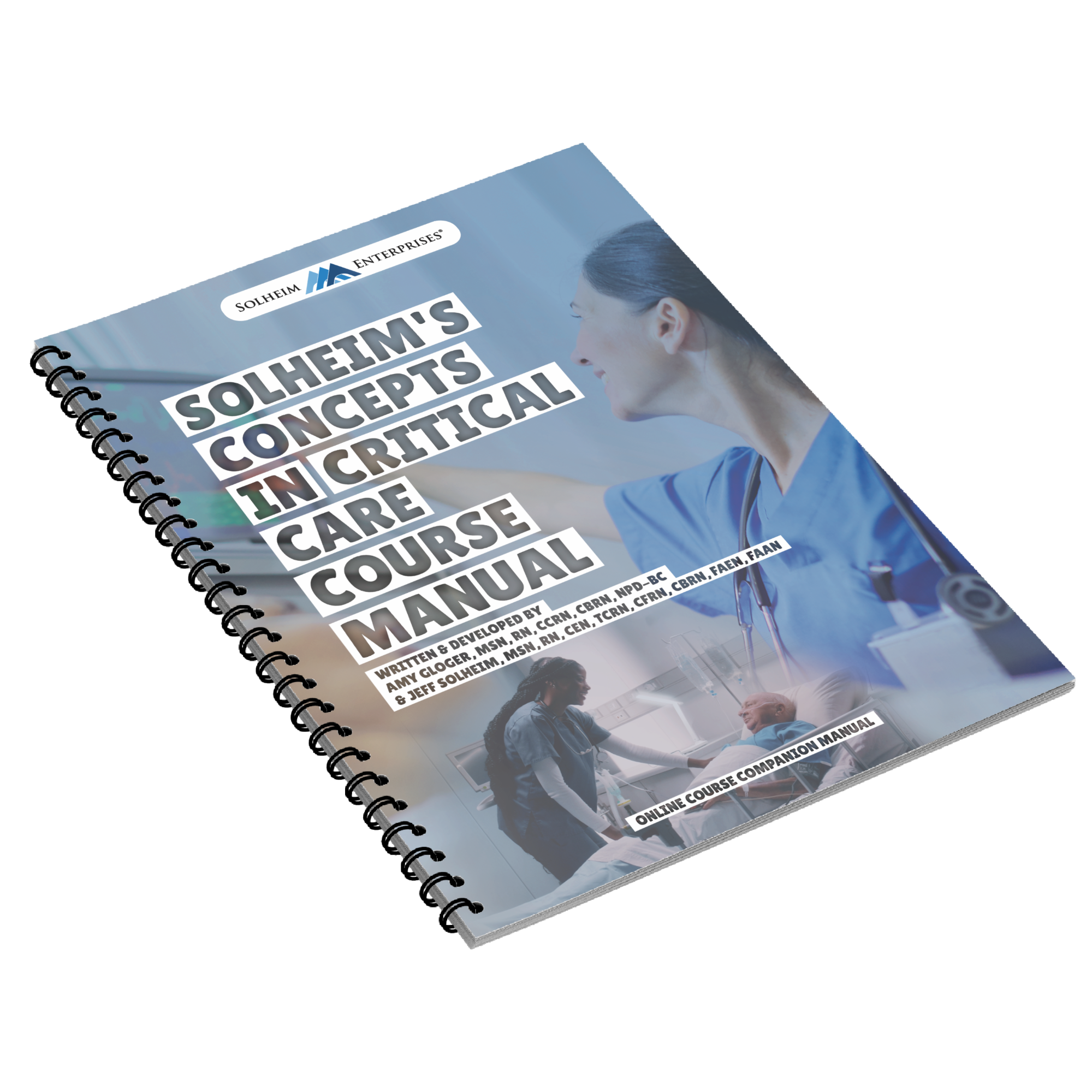
Unlock a deeper understanding of critical care with the "Concepts in Critical Care" course manual, expertly crafted by Amy Gloger and Jeff Solheim. This course manual will guide you through our on-demand course and equip you with essential insights and knowledge to enhance your ability to care for critical care patients.
We released the online version of Solheim’s Concepts in Critical Care course in March 2025. This course manual will walk you through the online courses from start to finish. This is not a digital version of a manual.
This USB comes with the audio from all of the modules from Solheim's Online Concepts in Critical Care Course.
The audio version of the course has not been approved for contact hours
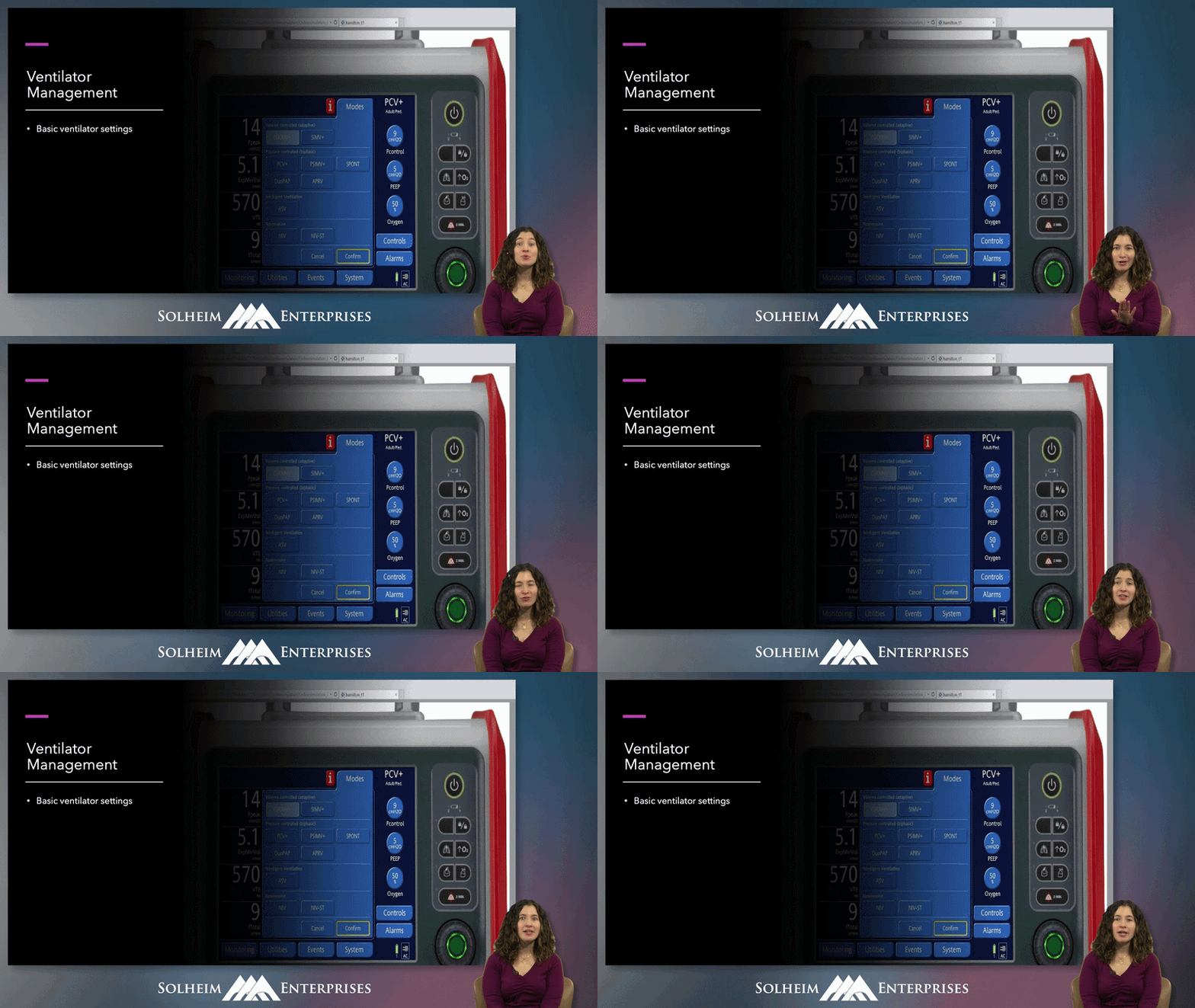
On-Demand
Just like our live courses, this video series is broken down into the following sections:
Cardiac Physiology
Arterial Lines and Central Lines
Critical Care Infusions
Pulmonary Physiology
Critical Care Assessment
Critical Care Case Studies
If you have a group of 2 or more, click ‘Group Enrollment’ to activate volume discounts at checkout.
Interested in Hosting a Concepts in Critical Care Course?
Solheim's Concepts in Critical Care Course (OCEAN ID #2025-11) has received OCEAN approval for 15.5 contact hours (expires 3/4/27)
This nursing continuing professional development activity was approved by Oregon Nurses Association, an accredited approver by the American Nurses Credentialing Center's Commission on Accreditation | Approval valid through 3/4/2027 | OCEAN ID #2025-11