
CEN-Focused Rationales
(From Email Sent on November 24, 2025)
QUESTION ONE: The correct answer is B. During pregnancy, women tend to urinate more frequently (secondary to increased blood volume and pressure exerted on the bladder by the gravid uterus). This may cause unusually low BUN and creatinine levels as a normal variance of pregnancy. Early signs of fetal distress are more likely to be noted as fetal tachycardia. Acute kidney injury tends to cause an elevation rather than a reduction in BUN and creatinine. Placental abruption causes abdominal pain, possible bleeding and signs of fetal distress but does not cause a decrease in BUN and creatinine.
QUESTION TWO: The correct answer is A. Alkalization of the urine with intravenous sodium bicarbonate protects a patient with rhabdomyolysis from developing acute kidney injury secondary to myoglobin within the glomeruli and large doses of intravenous sodium bicarbonate may be given to these patients with the goal of keeping the urine pH above 8.0. Intravenous sodium bicarbonate is generally not used as part of the treatment regimen for patients with pancreatic injuries, spinal cord injuries or a placental abruption.
QUESTION THREE: The correct answer is A. Rehabilitation requires a patient to learn new skills and this requires cognitive ability. Patients with traumatic brain injury will likely have a decreased ability to learn new skills which can complicate or prolong the rehabilitation process. The fact that the patient requires assistive devices to ambulate does not necessarily have a negative impact on rehabilitation. In fact, one goal of rehabilitation may be to assist the patient to learn to ambulate without the assistive device (or learn to use the assistive device properly). Adolescents often have an increased ability to learn even if they have not graduated from high school, so this is not likely to have a negative impact on rehabilitation. Many patients in rehabilitation will require pain medication for their injuries and rehabilitation may exacerbate that pain, so oral analgesia is unlikely to have a negative impact on rehabilitation.
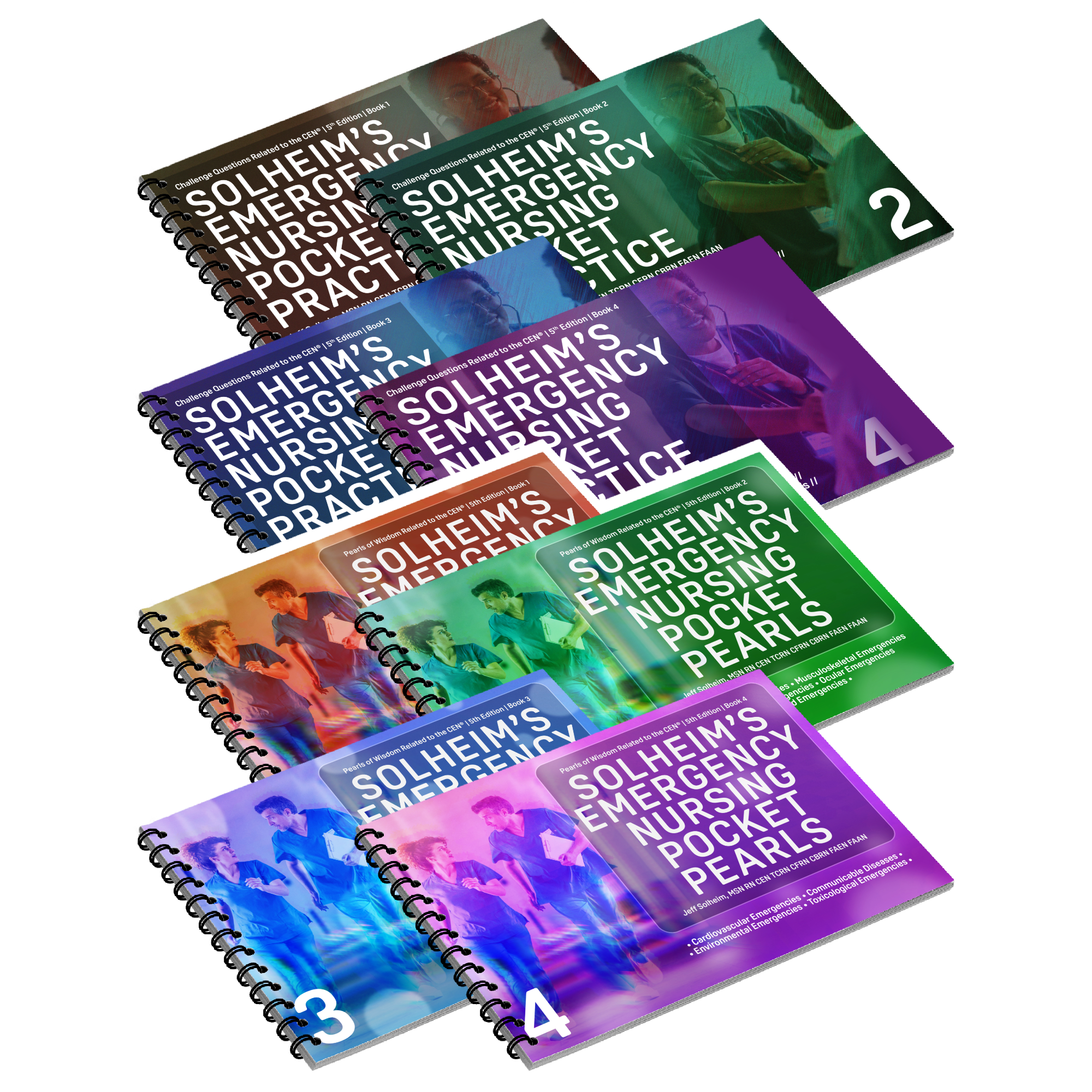
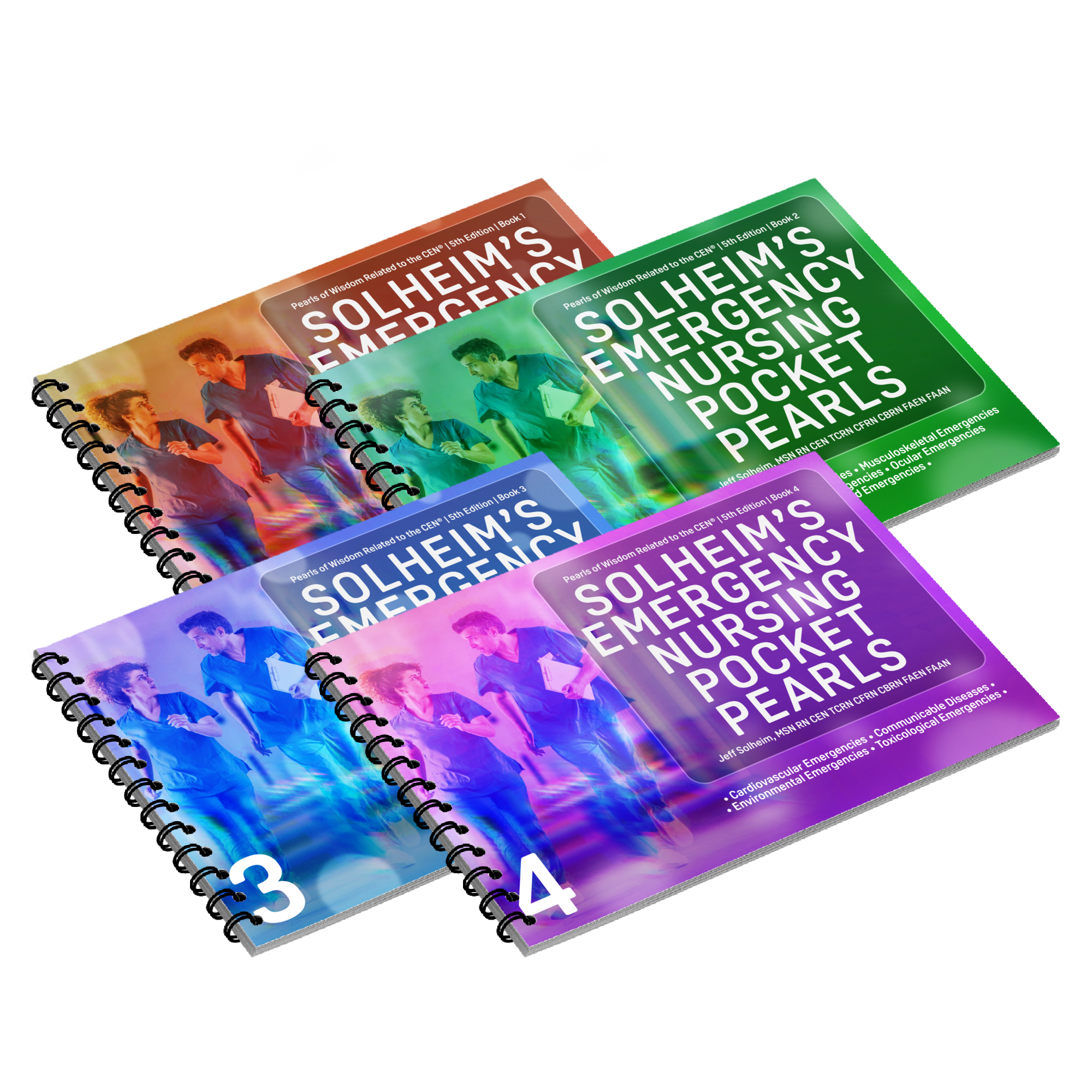
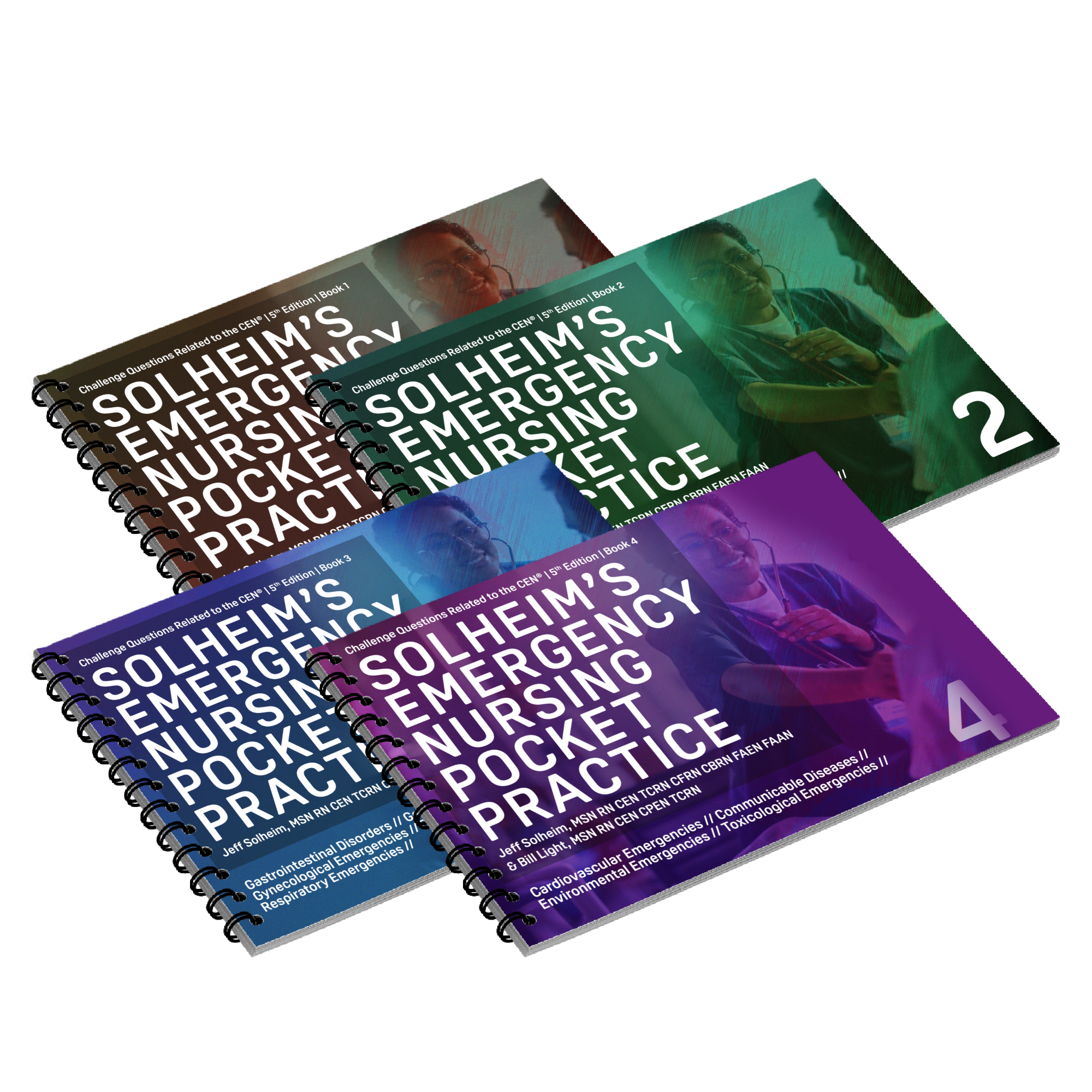
Online Companion Manual - Though not required, we highly recommend that each student taking an On-Demand Review Course get a companion manual. This manual is carefully built around the course, which adheres to BCEN’s July 2026 Content Outline, and features brand-new Challenge Questions, interactive exercises, and fill-in-the-blanks to help ensure the information being taught sticks with you for exam day. This is not a digital product.
Complete Study Guide - Solheim Study Guides are packed with interactive exercises, key charts, graphs, and tables, plus seriously challenging questions designed to take the most important ideas from the content outline and break them down into a clear, comprehensive book. Unlike Companion Manuals, Study Guides are not intended to be used with on-demand courses, but you’re free to use them however you like. Choose one, and get to studying! This is not a digital product.